Most SEO audits go sideways for a boring reason: the team starts fixing whatever looks wrong first.
The title feels weak, so someone rewrites metadata. The homepage is slow, so engineering chases load time. A few URLs are not indexed, so content rewrites the copy. A week later, people have been busy, but nobody can answer the one question that matters: what is actually holding the site back right now?
If your website has been live for a while and growth feels stuck, you do not need a longer punch list. You need a sequence. A useful audit does two things well:
- It finds the real blockers instead of the loudest symptoms.
- It tells the team what to fix now, what to fix next, and what can wait.

The first job of an audit is not to find everything. It is to separate crawl and index blockers from the smaller issues that only matter after the foundation is sound.
Why most SEO audits create motion, not progress
A weak audit usually produces a flat list:
- Titles are duplicated
- Some H1s are missing
- Images have no alt text
- Several URLs redirect
- Important pages are not indexed
- Internal links are thin
- Template pages look too similar
None of those findings are fake. The problem is that they do not belong on the same level.
If the site is leaking authority through bad canonicals, broken discovery paths, or accidental noindex rules, polishing headings is not an SEO strategy. It is expensive theater.
Before you call any audit complete, it should answer three questions:
- Which issues directly affect crawlability and indexation?
- Which issues cap ranking potential even if the page is already indexable?
- Which issues are cleanup work and should not steal the queue?
The audit order that actually helps
When I run this in SeoSpeedup, I do not start with copy edits. I move through the site in four passes.
1. Confirm that search engines can enter, crawl, and keep the right pages
This is the baseline layer:
- Do important URLs return a clean
200 OK? - Are there redirect chains, widespread
302s, or dead links in critical paths? - Is
robots.txtreadable and sane? - Does the XML Sitemap include the pages that matter?
- Are canonical tags self-referencing where they should be?
- Did anyone accidentally ship
noindexon core pages?
This is where the SEO Analyzer earns its keep. You are not trying to optimize yet. You are checking whether the site is even eligible to compete.
If crawl rules are messy, compare them with the Robots.txt Generator, rebuild discovery paths with the Sitemap Generator, and verify canonical output with the Canonical Tag Generator.
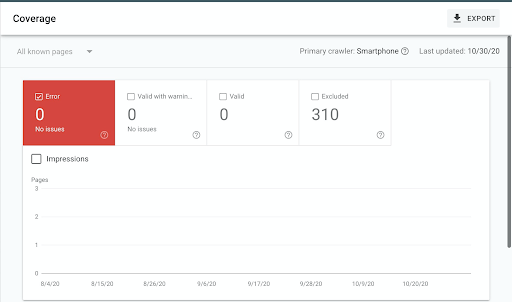
If indexation is already messy, read Page Not Indexed? Stop Redrafting and Start Troubleshooting before the team wastes another sprint rewriting text that search engines are not using.
2. Check whether the page structure makes technical sense
Once access and index rules are clean, move down to page-level technical SEO.
Look at:
- Missing or duplicated Title and Description tags
- Broken heading hierarchy
- Conflicting canonical, hreflang, or pagination signals
- Weak semantic structure
- Mobile rendering issues
- Core Web Vitals or obvious performance bottlenecks
A lot of teams start here by habit. That is fine only if step one is already under control. If not, you are tuning the dashboard while the engine light is still on.
For launches and replatforming projects, this article pairs well with The Ultimate Pre-Launch SEO Checklist.
3. Check whether the page deserves to rank at all
Technical compliance is not the finish line. Some pages are crawlable, indexable, and still too weak to win.
This is where you check:
- Does the page actually answer the query, or is it just long?
- Are multiple URLs fighting over the same intent?
- Are template pages repeating the same thin structure?
- Does the page have enough internal links and topical context?
- Is the search intent commercial, informational, or navigational, and does the format match it?
If the page is hard to discover internally, fix that before you expect rankings to move. The companion read here is Internal Linking: How to Support the Right Page Instead of Diluting the Cluster.
4. Turn findings into a repair order, not a wall of notes
This is the step many teams skip, and it is why their audits die in a slide deck.
I bucket findings into three levels.
P0: Crawl, index, and access blockers
Examples:
- Wrong
robots.txtdirectives - Canonicals pointing to the wrong URL
- Core pages marked
noindex - Sitemap errors
- Large sets of broken or redirected key URLs
- Duplicate URLs getting indexed instead of the preferred version
These get fixed first because they decide whether Google can even place the right pages into the competitive set.
P1: Ranking capacity problems
Examples:
- Weak content that misses the query
- Messy page structure
- Thin internal linking
- Mobile UX issues
- Slow templates that hurt rendering or engagement
- Repeated template pages with low differentiation
These do not usually block indexing, but they cap how far the page can go.
P2: Local improvements and polish
Examples:
- Missing image alt text on a few assets
- Minor schema cleanup
- Small copy refinements
- CTA wording consistency
- Secondary metadata improvements
These still matter. They just should not jump the line ahead of sitewide blockers.
A simple way to hand the audit to a real team
An audit becomes useful when it turns into ownership.
| Issue type | Scope | Priority | Owner | Suggested SLA |
|---|---|---|---|---|
| Crawl / index control | Sitewide or core sections | P0 | Engineering / technical SEO | 24 to 72 hours |
| Page structure / template logic | Section or template level | P1 | Frontend / SEO | 3 to 7 days |
| Content quality / search intent | Page or content cluster | P1 | Content / SEO | 1 to 2 weeks |
| Cleanup / enhancements | Page-level details | P2 | SEO / editorial | Ongoing |
That split does two useful things:
- It keeps SEO from sounding like vague advice.
- It lets product, engineering, content, and growth work from the same queue.
If you want the operational layer, run the diagnosis in SEO Analyzer, then move the surviving page opportunities into Keyword Optimization Service. That way, technical repairs and ranking work run in parallel instead of stepping on each other.
Where AI helps in an audit and where it does not
AI is useful in an audit, but only after the facts are already grounded.
Use AI for:
- Summarizing patterns across many URLs
- Explaining why a problem matters in plain language
- Turning findings into repair notes for developers or editors
- Comparing draft title and description options
Do not rely on AI alone to determine:
- Whether a page is actually crawlable
- What the live status code is
- What the canonical or robots output really says
- Whether the Sitemap is valid
- How real users and bots experience the page
The better workflow is simple: collect the evidence first, then let AI speed up explanation and execution.
The audit lens changes for three types of sites
New sites
Focus on discovery and index readiness first:
- Are there clear entry points for crawlers?
- Are the important pages in the Sitemap?
- Are metadata, canonicals, and core templates stable?
Redesigns and migrations
Focus on continuity:
- Do old URLs map cleanly to the new structure?
- Did redirects, canonicals, and internal links survive the launch?
- Are previously indexed pages still reachable and useful?
Multilingual sites
Focus on signal alignment:
- Are
hreflangrelationships correct? - Are canonicals staying within the right language version?
- Are different locales targeting distinct intents cleanly, or cannibalizing each other?
Conclusion
A website SEO audit is not a contest to see who can find the most issues.
It is a prioritization exercise. The real win is identifying the few problems that are suppressing crawlability, indexation, and ranking capacity right now, then fixing them in the right order.
If your site feels stuck, do not start by rewriting random pages. Start by running the full diagnosis in SEO Analyzer. Once the foundation is stable, use Keyword Optimization Service to decide which pages deserve the next round of content and ranking work.
That is the difference between doing SEO and actually clearing the bottlenecks that stop a site from growing.